
Strangex
ByteCore Ltd.Social
2.5224.00 Reviews
- Version
- 1.0.16
- Installs
- 100.00K
- Age Rating
- Mature 17+
Screenshots
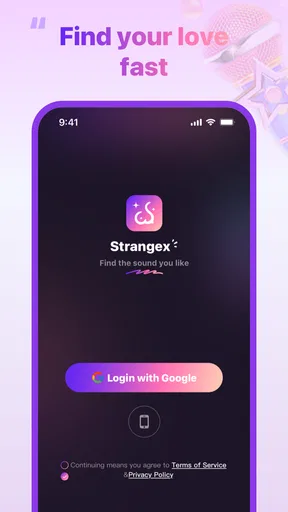
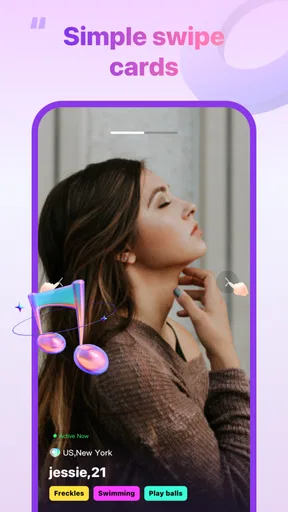
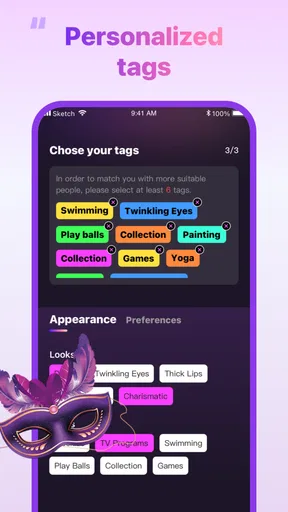
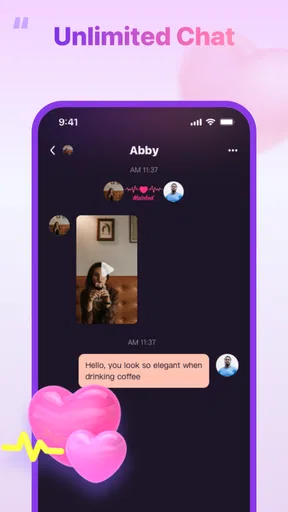
Our Review of Strangex
 Analysis by Appyee
I approached Strangex as a social app for people who want matching, chatting, and dating in one place rather than juggling several services. My first impression was that its appeal depends less on a polished feature checklist and more on whether the people you meet are active, respectful, and willing to move a conversation forward. That makes it a very different experience from a messaging app built around existing friends.
It is published by ByteCore Ltd. and sits in the mature end of the social category, with a 17+ age rating. The app is free to install, although optional purchases range from $2.99 to $199.99 per item. That price range matters because a free starting point can still lead to spending if the parts of the experience you value most are connected to paid items.
I would describe it as a dating-oriented social experiment rather than an automatic solution for meeting someone. It can be useful when you are open to browsing unfamiliar profiles and starting conversations, but it asks you to do the work that many dating apps cannot do for you: judge intent, notice warning signs, and decide when a chat deserves more time.
From opening the app to finding a conversation worth keeping
I start with the practical question of what happens between opening Strangex and getting a worthwhile exchange: whether browsing leads naturally to a first message, and how much effort that takes from me. From there, I look at how the experience holds up when I check in repeatedly, since a dating app’s usefulness depends on more than a promising first visit.
The starting condition: what you are really looking for
Before opening Strangex, it helps to be honest about your goal. Someone looking for a quick exchange, casual discovery, or a new person to talk to may enjoy the format more than somebody expecting a carefully filtered matchmaking service. The store summary points directly toward matching, chatting, and dating, so the app is not trying to be a general-purpose community tool in the same way as a family messenger or a workplace network.
That distinction changes how I use it. I would not enter with the expectation that every match is meaningful. Instead, I would treat a match as an invitation to inspect the profile and begin a low-pressure conversation. The useful outcome is not simply collecting matches; it is identifying one person whose communication style, expectations, and availability seem compatible with mine.
A practical first step is to decide what information I am comfortable sharing at the beginning. I would keep early conversations inside the app, avoid sending personal contact details immediately, and pay attention to whether the other person answers the question I actually asked. This is especially important in an app where the move from matching to private conversation can happen quickly.
Step one: turning a match into a real exchange
The matching stage is only the input to the workflow. A match has no value if both people wait for the other to write, and a generic greeting gives the conversation very little to work with. I get better results by referring to something visible in the other person’s profile and asking a question that can be answered naturally. That creates a clearer handoff from browsing to chatting.
For example, if a profile mentions a hobby, I might ask how the person got into it rather than sending a bare “hello.” This does not guarantee a reply, but it gives the other person an easy opening. It also helps me distinguish between someone who wants an actual conversation and someone who is only collecting matches.
One non-obvious trade-off is that a more direct opening saves time but can also narrow the conversation too early. A playful question may feel warmer, while a clear question about intentions can prevent wasted effort. I would use the first few messages to learn how the person communicates, not to force an immediate decision about dating.
Step two: using chat as a screening stage
Chat should be treated as a screening stage, not proof that a match is safe or compatible. I look for consistency between the profile and the conversation, reasonable answers, and respect for boundaries. If somebody pushes for personal information, money, private images, or an immediate move to another service, I would end the exchange rather than trying to rescue it.
This is where Strangex requires more judgment than a simple list of attractive profiles might suggest. The app can put two people in the same conversation, but it cannot replace the user’s ability to assess tone and behavior. My advice is to keep the first conversation short enough that it does not become an obligation. If the exchange feels one-sided or uncomfortable, there is no benefit in continuing just because a match already happened.
A useful workflow is to ask one question, answer one question, and then see whether the other person contributes without being prompted repeatedly. That small test reveals more than a long series of compliments. It also prevents the common mistake of confusing frequent messages with genuine interest.
Step three: deciding whether to hand the conversation off
The next handoff is from in-app chat to a more personal form of contact, such as a phone call or meeting. I would delay that step until the conversation has shown basic consistency. There is no advantage in moving quickly merely because the chat started well. A person who respects a slower pace is giving me useful information about how they may behave later.
If I eventually agree to meet, I would choose a public location, tell someone I trust where I am going, and arrange my own way home. Those precautions are not a criticism of this particular app; they are sensible for any service that connects strangers. The mature age rating is a reminder that the intended audience is adults, not that every interaction is automatically mature or reliable.
The handoff can also fail for ordinary reasons. One person may want friendship while the other expects romance. Someone may enjoy text conversations but avoid making plans. Another user may be active only occasionally. I would clarify expectations before investing too much emotional energy, because a vague match can become frustrating when each person is following a different idea of progress.
A realistic everyday scenario
Imagine I have a quiet evening after work and want to meet someone outside my usual circle. I open the app, review a few profiles, and find a match that seems promising. Instead of sending several messages at once, I write one specific question. The other person replies, asks something back, and the exchange develops naturally.
At that point, I would not immediately treat the conversation as a success. I would check whether replies remain respectful over time and whether the person is comfortable discussing ordinary topics rather than steering everything toward intimacy. If the interaction remains balanced, I might suggest a short public coffee. If the replies become evasive, demanding, or inconsistent, the correct outcome is to stop, not to spend more money or more time trying to make the match work.
This scenario shows the real value of the app: it can reduce the distance between discovering someone and beginning a conversation. The result still depends on the quality of the exchange after the match.
Where the flow becomes less comfortable
The biggest friction is that a free app with optional purchases can create uncertainty about which parts of the experience are most useful without spending. The available purchase range is broad, from $2.99 to $199.99 per item, so I would review every purchase screen carefully and avoid buying anything simply because a conversation has stalled. Paying cannot create mutual interest, improve a poor match, or make an unsafe interaction safe.
I would also keep expectations realistic because the app has an average rating of 2.5 from around 438 ratings, alongside around 224 written reviews. That does not tell me exactly what every user experienced, but it is enough to approach the service cautiously rather than assuming a universally smooth experience. The app has passed 100K installs, so there is a meaningful user base, yet a large installation count does not guarantee that the people near me will be active or compatible.
The current version is 1.0.16, and the app was released on October 8, 2024. Those details place it in a relatively early stage compared with long-established dating platforms. In practical terms, I would expect the experience to depend heavily on the current community and on how consistently the app is maintained. I would update it when prompted, but I would not assume that a newer version automatically solves every social or moderation problem.
How it compares with familiar alternatives
Compared with a standard messaging app, Strangex has a clearer path from meeting a stranger to starting a dating conversation. A messenger is better once I already know someone, but it does not normally help me discover compatible new people. Strangex is more relevant at the discovery stage, while a conventional messenger may be better after trust has been established.
Compared with a mature dating platform, the trade-off is predictability. Established services often give users a familiar structure for profiles, filters, and conversations, while a newer or smaller service may feel less settled. Strangex can be worth trying if I want to explore another pool of people, but I would not abandon a platform that already provides better local activity, stronger controls, or clearer communication tools for my needs.
It also differs from a broad social network. A general network is usually built around public posts, existing communities, or shared interests. Strangex puts the one-to-one match and chat closer to the center of the experience. That focus is helpful for someone who wants direct interaction, but it may feel narrow to users who prefer group discussion or casual browsing without dating expectations.
Who should try it, and who should skip it
I think Strangex is most suitable for an adult who is comfortable initiating conversations, understands that matches are only starting points, and is willing to leave when an interaction feels wrong. It may also suit someone who has already tried the usual dating apps and wants to see whether a different community produces better conversations.
I would skip it if I want a completely free experience with no purchase prompts, if I dislike talking to strangers, or if I expect an algorithm to make reliable romantic decisions for me. It is also not the right choice for anyone under the stated age requirement. People who need highly structured relationship preferences, a very active local pool, or extensive control over discovery may prefer a more established alternative.
Small habits that improve the outcome
Write one thoughtful opening instead of sending repeated greetings. The response pattern tells me whether the other person is participating.
Keep early chat focused on ordinary conversation as well as attraction. That makes it easier to notice inconsistencies before a meeting.
Do not treat paid items as a shortcut to attention. I would spend only when I understand exactly what I am receiving and why it improves my workflow.
Set a stopping point for inactive matches. Leaving every silent conversation open makes the app feel busier without creating better results.
Move to a meeting only after the handoff feels mutual. A quick public plan is safer and more informative than sharing extensive personal details first.
The result: useful doorway, uncertain destination
After following the full path from browsing to chat and then evaluating whether to continue, my view is balanced. Strangex makes the first connection straightforward enough for adults who want a focused social and dating experience. Its strongest role is as a doorway: it gives me a place to discover people and test whether a conversation has potential.
Its limitations appear after that doorway. The app cannot guarantee active matches, compatible intentions, respectful behavior, or a satisfying date. The low average rating and broad range of optional purchase prices reinforce my decision to use it cautiously and judge the experience by actual conversations rather than by the promise of matching.
My honest recommendation is to try Strangex without spending first, keep personal boundaries firm, and treat every match as an untested possibility. If the people I encounter are responsive and the workflow feels comfortable, it can be a useful addition to my dating routine. If I need a more established community, stronger predictability, or a strictly no-purchase experience, another service will probably be the better fit.
Verdict
Strengths of Strangex
- Distinctive social experience focused on meeting people outside your usual circle.
- Simple interface makes browsing profiles and starting conversations easy.
- Useful discovery tools help surface interesting users and communities.
- Encourages spontaneous interactions rather than highly curated social feeds.
- Available on mobile, making conversations convenient while you are on the go.
Limitations of Strangex
- The user base may be small depending on your location and time of day.
- Some features may require in-app purchases or a premium subscription.
- Profile quality can vary, so finding genuinely active users may take time.
- As with any social app, unwanted messages and fake profiles are possible.
- Privacy settings should be reviewed carefully before sharing personal information.
Similar Picks in This Category
View All
Meta Platforms, Inc.4.6

Instagram4.0

Likee-Live, Chat & Party Games
Likeme Pte. Ltd.4.4

Facebook Lite
Meta Platforms, Inc.4.5

TikTok - Videos, Shop & LIVE
TikTok Pte. Ltd.4.0

Moj: Free Short Drama & Reels
ShareChat4.1
Frequently Asked Questions
What is Strangex and what can I use it for?
Strangex is an app designed for users who want to explore unusual content, interactions, or experiences in a more unconventional digital environment. Depending on the version and platform, its available tools may include browsing, discovery, communication, or entertainment features. Before downloading, review the current store description carefully, because features, supported regions, and the type of content available may change over time.
Is Strangex free to download and use?
Strangex may be available as a free download, but users should check whether it includes advertising, optional purchases, subscriptions, or paid features. Some functions may be limited until an account is created or a premium plan is activated. We recommend reviewing the pricing information shown in the Google Play Store or Apple App Store before confirming any purchase, particularly if the app offers recurring subscriptions.
Is Strangex safe for personal information and private conversations?
Before using Strangex, examine its privacy policy and the permissions requested during installation. If the app allows profiles, messaging, media sharing, or location-based features, avoid publishing sensitive information and be careful when interacting with unknown users. Use a strong, unique password, enable available security options, and report suspicious behavior through the app’s moderation or support tools.
Which devices and operating systems support Strangex?
Compatibility depends on the edition of Strangex available in your region. Check the official Google Play Store or Apple App Store listing for the required Android or iOS version, device specifications, and current availability. Older phones may experience slower performance, crashes, or missing features, while some functions may require a stable internet connection, camera access, notifications, or additional storage.
What should I do if Strangex does not work correctly?
If Strangex crashes, fails to load, or does not send notifications, first confirm that your internet connection is stable and that the app is updated. Restarting the device, clearing temporary data on Android, or reinstalling the app can also help. If the problem continues, check the developer’s support page and provide your device model, operating-system version, and a clear description of the issue.
